
Archived
Scientists have spotted unexpected X- and C-shaped structures in the atmosphere. They are struggling to explain them.

The structures were detected by instruments on GOLD that were fabricated at the Space Sciences Laboratory. Additional information regarding the investigation of these structures are detailed in a recent CNN article.
Read MoreESCAPADE Mars Mission on Track for Fall 2024 Launch
The Escape and Plasma Acceleration and Dynamics Explorers (ESCAPADE) mission to Mars, led by the University of California, Berkeley’s Space Sciences Laboratory, is set to launch sometime in fall 2024. It consists of two identical smallsats, named Blue and Gold, that will study Mars’ magnetosphere and its interaction with the solar wind. While the exact…
Read MoreMisty Willer (1979-2024)
Message from acting director Stuart Bale: Dear SSL friends, I’m very sad to tell you that our colleague and dear friend Misty Willer passed away in the early morning hours on Sunday, May 26. She was 45 years old and had been battling brain cancer for 6 years. She is survived by her husband, Chris,…
Read MoreDark Energy results from the first year of DESI operations
[Read the full article in Berkeley Lab News] Researchers have used the Dark Energy Spectroscopic Instrument to make the largest 3D map of our universe and world-leading measurements of dark energy, the mysterious cause of its accelerating expansion With 5,000 tiny robots in a mountaintop telescope, researchers can look 11 billion years into the past.…
Read MoreMANGO Captures Historic Geomagnetic Storm
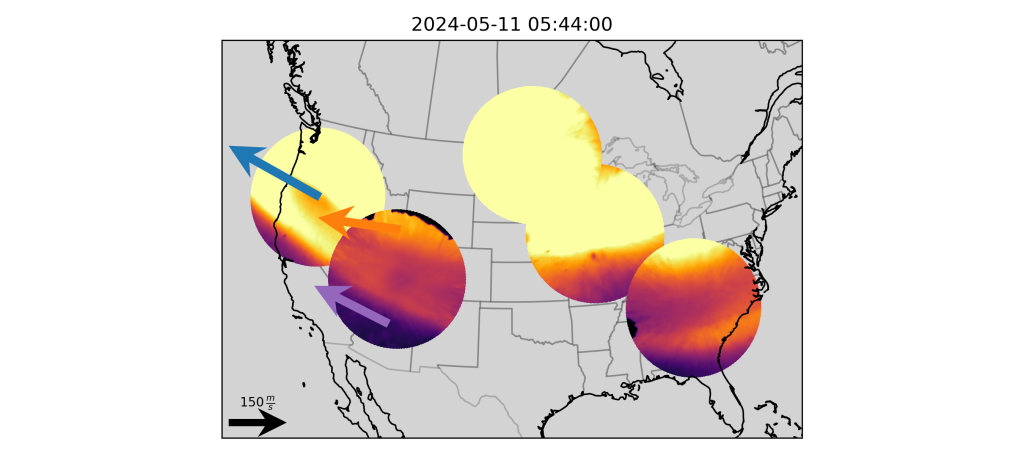
The historic May 11, 2024 geomagnetic storm awed aurora watchers in all 50 states, and scientists are actively analyzing data to determine its impacts on our atmosphere. One example is the NSF-supported MANGO network (Mid-latitude All-sky-imaging Network for Geophysical Observations) in the continental US. MANGO is a partnership between SSL, the University of Illinois and…
Read MoreSSL booth draws students, families despite rainy Cal Day

Cal Day was celebrated on Sat. April 13th from 8:00am-4:00pm. White-tented booths were arranged around the central campus, staffed by dozens of individual departments for the annual UC Berkeley open house. Close to 8000 official visitors (newly admitted students, current students and their families) enjoyed exploring the booths to learn all about Berkeley as their…
Read MoreFOXSI-4 observes large solar flare
FOXSI-4 successfully pioneered the observation of a large solar flare onboard a sounding rocket.
Read MoreCURIE ready for Ariane 6 launch
Chris Moeckel and Roger Roglans recently returned from Berlin, where they successfully integrated CURIE into the NovaPod with four other satellites. After a stop in Paris, the NovaPod will travel to French Guiana to be launched on an Ariane 6 maiden flight. CURIE is the CUbesat Radio Interferometry Experiment; its two satellites will measure radio…
Read MoreWork of SSL DESI team featured in NYT article on dark energy
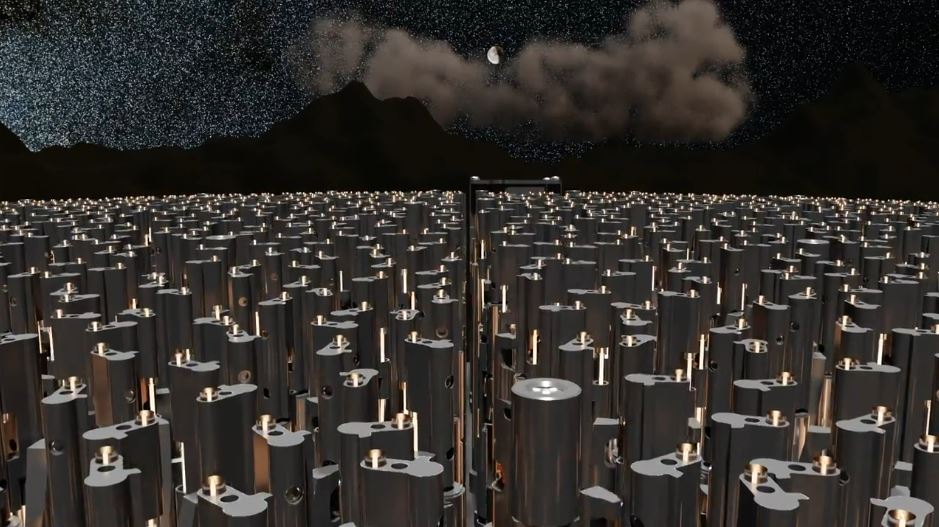
An article in the New York Times on April 4 titled “A Tantalizing ‘Hint’ That Astronomers Got Dark Energy All Wrong” noted the DESI team’s contribution to recent discoveries on the nature of dark energy that challenge previous models showing it is a constant force. DESI is the Dark Energy Spectroscopic Instrument, an international collaboration.…
Read MoreBerkeley News: UC Berkeley will manage $300 million NASA mission to map the UV universe
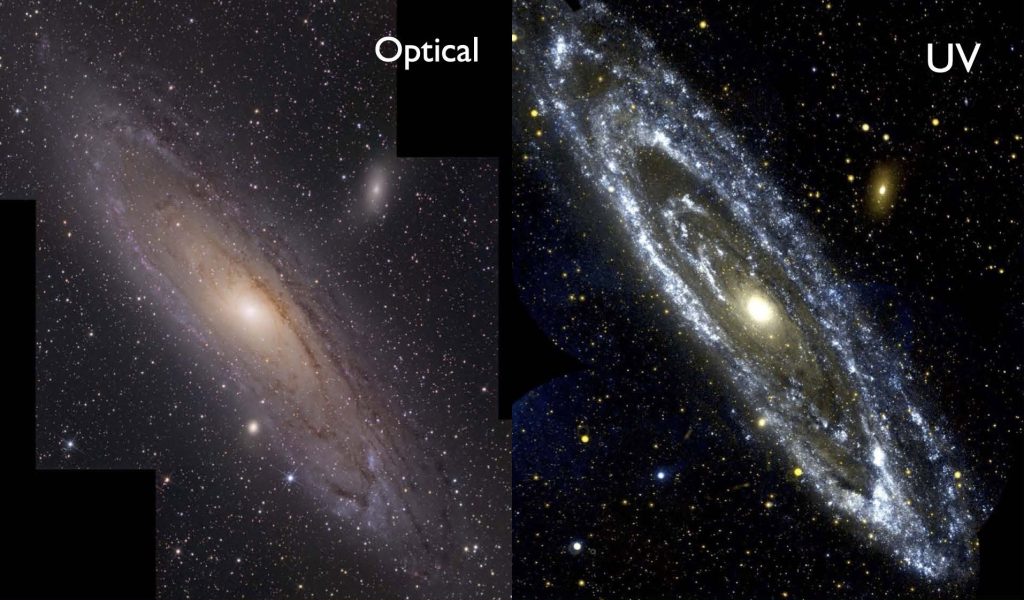
An orbiting space telescope approved by NASA last month and scheduled for launch in 2030 will conduct the first all-sky survey of ultraviolet (UV) sources in the cosmos, providing valuable information on how galaxies and stars evolve, both today and in the distant past.
The $300 million satellite mission, called UVEX (UltraViolet EXplorer), will be managed by the Space Sciences Laboratory (SSL) at the University of California, Berkeley.
Read More