

ESCAPADE spacecraft are now flying through Earth’s magnetotail

With their instruments now fired up and recording data, the twin ESCAPADE satellites are undertaking a test run before they head to Mars later this year. On Wednesday, Mar. 4, they will plow through a never-explored area around Earth: its distant magnetotail.
CINEMA mission will explore auroras and Earth’s mysterious magnetotail

Much of what we see as auroras near the northern and southern magnetic poles begins as plasma currents in the Earth’s magnetotail. NASA’s CINEMA mission will probe this unexplored region.
NASA’s Carruthers Geocorona Observatory will study Earth’s exosphere
NASA’s Carruthers Geocorona Observatory launched this morning. Carruthers is now traveling toward the Sun, around which it will enter solar orbit almost a million miles away from Earth and focus on Earth’s exosphere.
PADRE aims to reveal secrets of solar flares

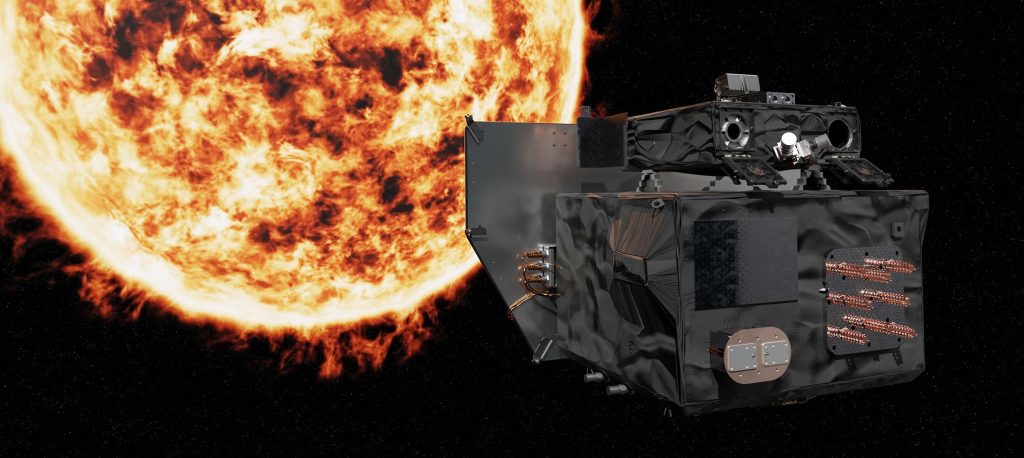
NASA’s PADRE mission will measure hard X-rays emitted during solar flares. It is poised to unlock the secrets of solar flares at a fraction of the cost of previous missions.
Sample return experts at the Space Sciences Laboratory uncover asteroid Bennu’s secrets
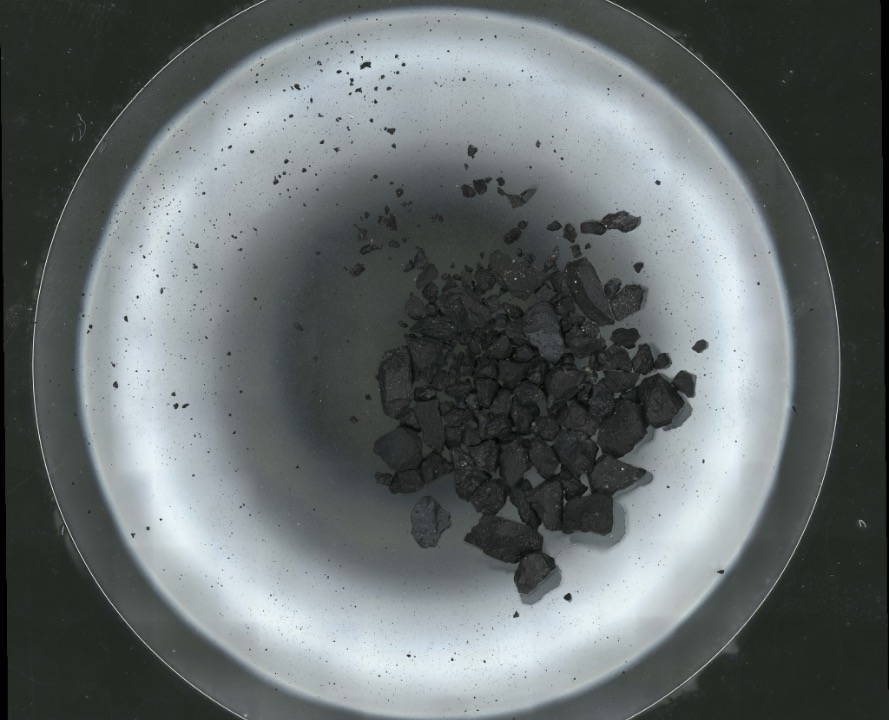
When NASA’s OSIRIS-REx spacecraft passed by the Earth in 2023 and released a sample return capsule, it marked the end of a journey to visit and collect a small piece of an asteroid, but the journey to understanding that material had only just begun.
Stuart D. Bale awarded Arctowski Medal for solar physics research

National Academy of Sciences award includes additional funding for solar physics research Stuart D. Bale, Interim Director of the UC Berkeley Space Sciences Laboratory (SSL) and Professor of Physics, has been awarded the National Academy of Sciences’ prestigious Arctowski Medal in recognition of his contributions to our understanding of the physics of the solar corona and the […]
MANGO Captures Historic Geomagnetic Storm
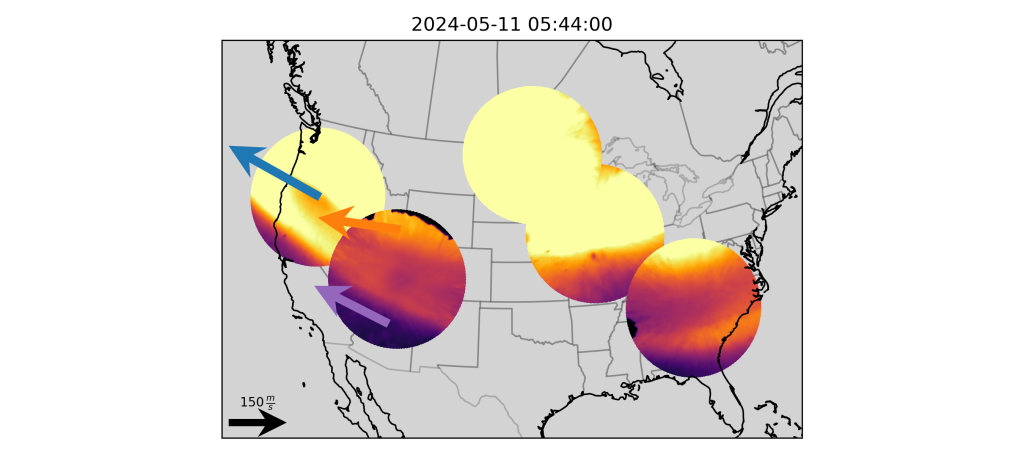
The historic May 11, 2024 geomagnetic storm awed aurora watchers in all 50 states, and scientists are actively analyzing data to determine its impacts on our atmosphere. One example is the NSF-supported MANGO network (Mid-latitude All-sky-imaging Network for Geophysical Observations) in the continental US. MANGO is a partnership between SSL, the University of Illinois and […]
FOXSI-4 observes large solar flare

FOXSI-4 successfully pioneered the observation of a large solar flare onboard a sounding rocket.
CURIE ready for Ariane 6 launch
Chris Moeckel and Roger Roglans recently returned from Berlin, where they successfully integrated CURIE into the NovaPod with four other satellites. After a stop in Paris, the NovaPod will travel to French Guiana to be launched on an Ariane 6 maiden flight. CURIE is the CUbesat Radio Interferometry Experiment; its two satellites will measure radio […]
Participate in Eclipse Megamovie!

If you have a DSLR camera and a tripod, you can participate in the Eclipse Megamovie project, run by current and former SSL researchers.