
WATCH: COSI will explore the gamma-ray sky
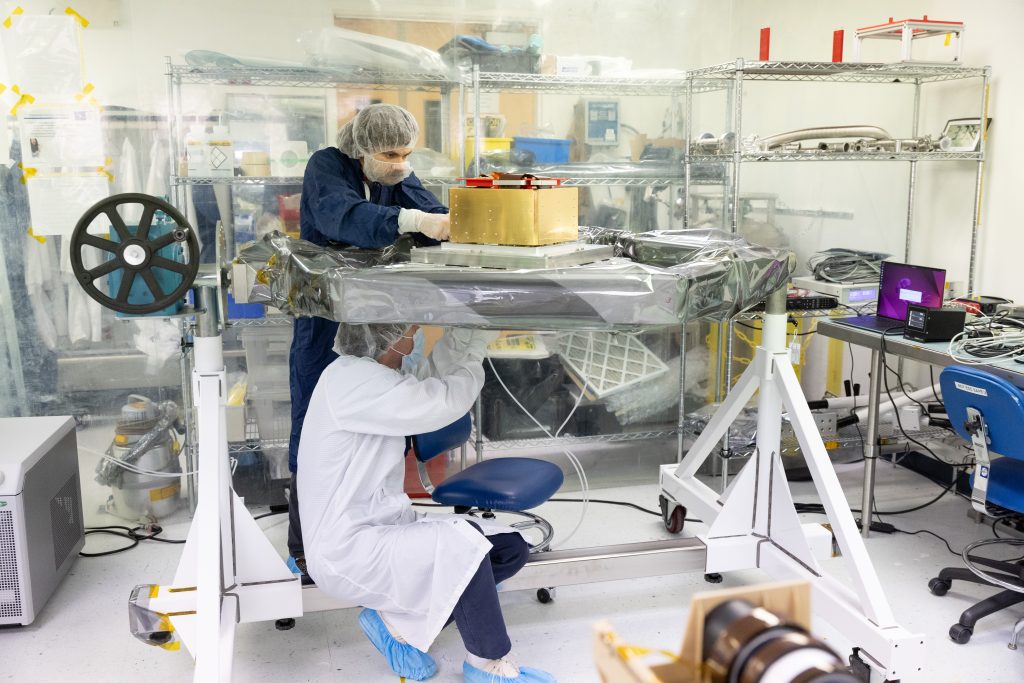
The payload for NASA’s Compton Spectrometer and Imager (COSI) mission is now being at UC Berkeley’s Space Sciences Laboratory (SSL). In this series of videos, John Tomsick describes how COSI operates.
Sample return experts at the Space Sciences Laboratory uncover asteroid Bennu’s secrets
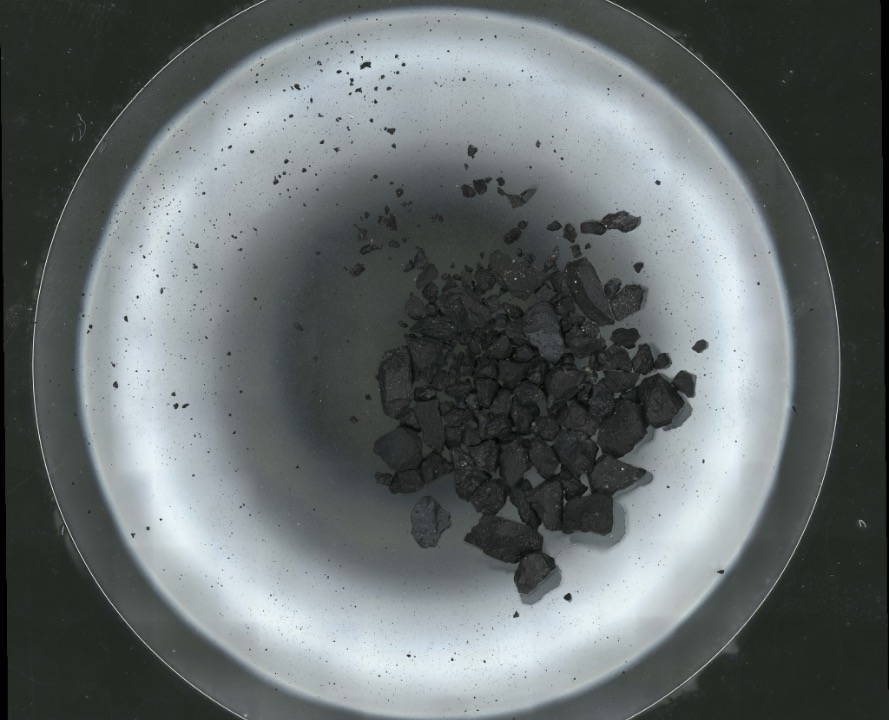
When NASA’s OSIRIS-REx spacecraft passed by the Earth in 2023 and released a sample return capsule, it marked the end of a journey to visit and collect a small piece of an asteroid, but the journey to understanding that material had only just begun.
FOXSI-4 observes large solar flare
FOXSI-4 successfully pioneered the observation of a large solar flare onboard a sounding rocket.
The Bliss Project: Small solar sails could be the next ‘giant leap’ for interplanetary space exploration
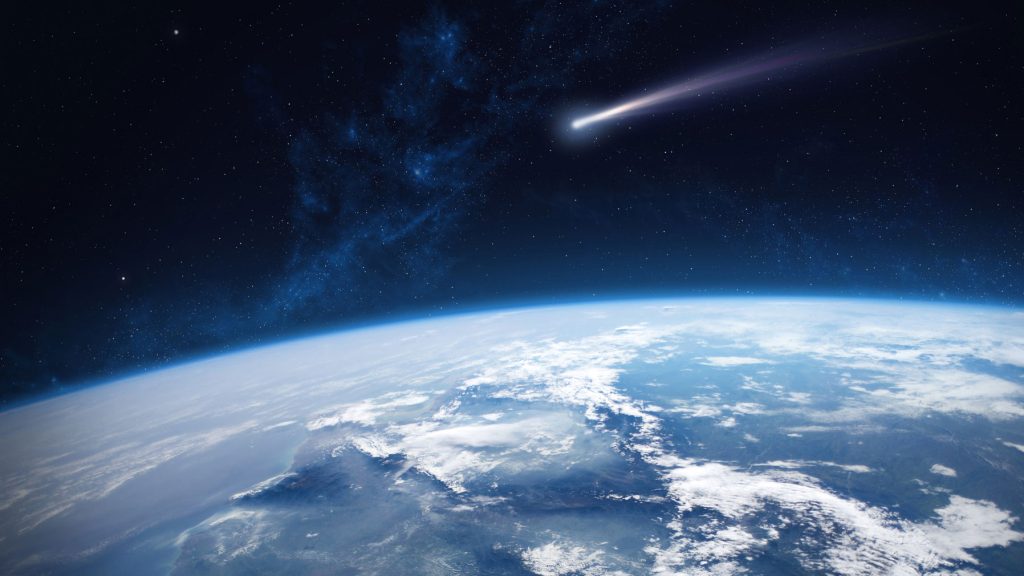
Small solar sails could be the next ‘giant leap’ for interplanetary space exploration. The BLISS project brings together researchers from the Department of Electrical Engineering and Computer Sciences and the Department of Mechanical Engineering, as well as the Berkeley Sensor and Actuator Center and the Space Sciences Laboratory.
NASA’s OSIRIS-REx to bring samples of asteroid Bennu to Earth: What to know
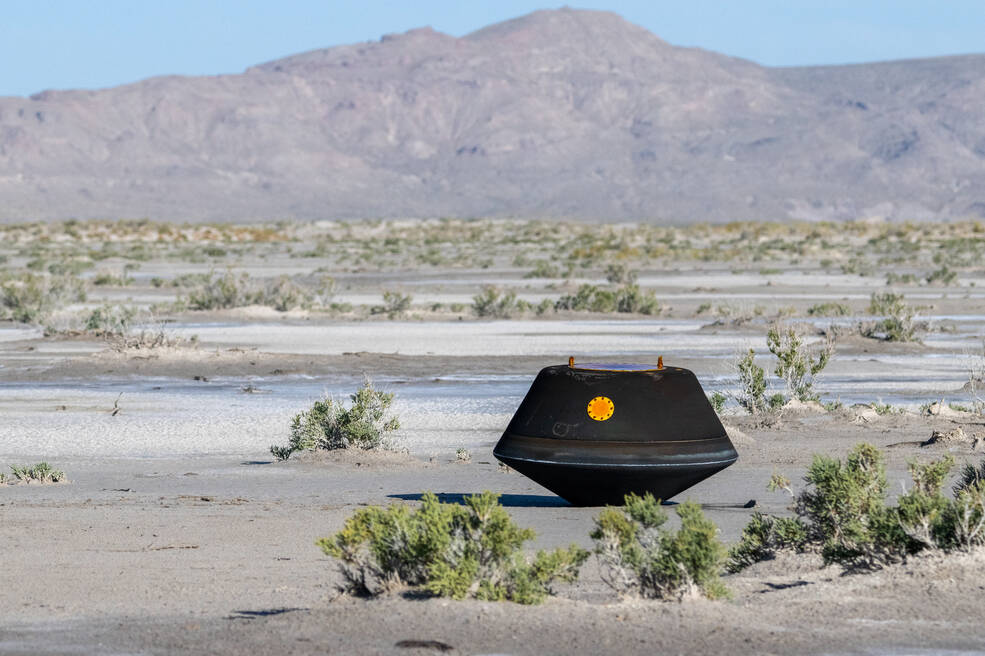
NASA is receiving its first long-awaited sample from an asteroid. OSIRIS-REx visited and collected samples from 101955 Bennu, a carbonaceous near-Earth asteroid. The sample’s return yesterday concludes a seven-year mission, and the contents will be studied by scientists worldwide. SSL research scientist Zack Gainsforth, interviewed by Al Jazeera English for this video, compares the magnitude […]
New SSL Undergraduate Engagement Group and Recent Activities/Achievements
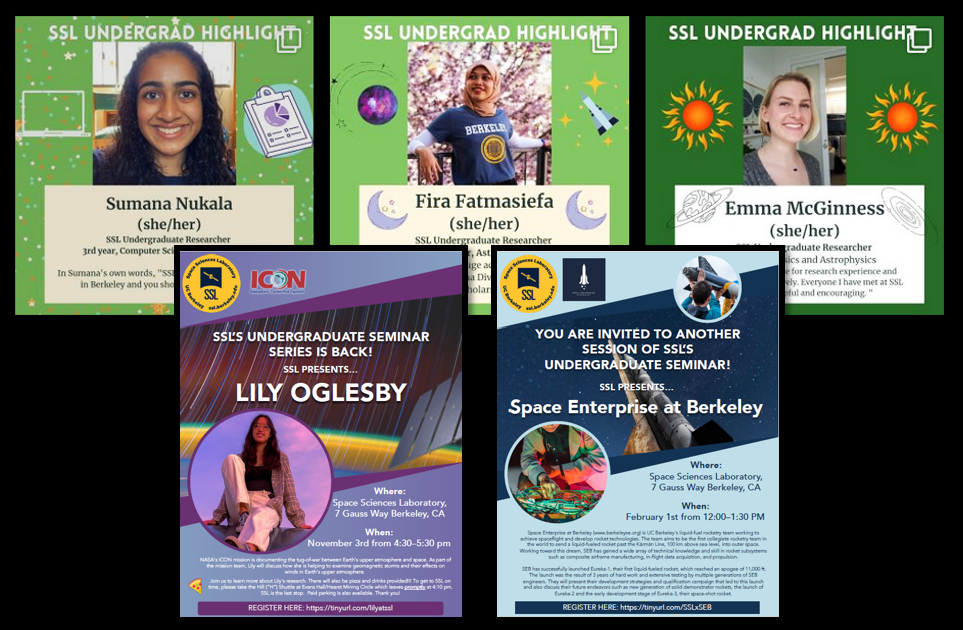
New SSL Undergraduate Engagement Group and Recent Activities/Achievements — “The University’s fundamental missions are teaching, research and public service” (source: UCOP). Although SSL excels at research, and through those discoveries, public service to a large degree, SSL’s role in and greater potential for contributing to the mission of teaching has been somewhat underappreciated on campus […]
Nature: “Are telescopes on the moon doomed before they’ve even been built?”
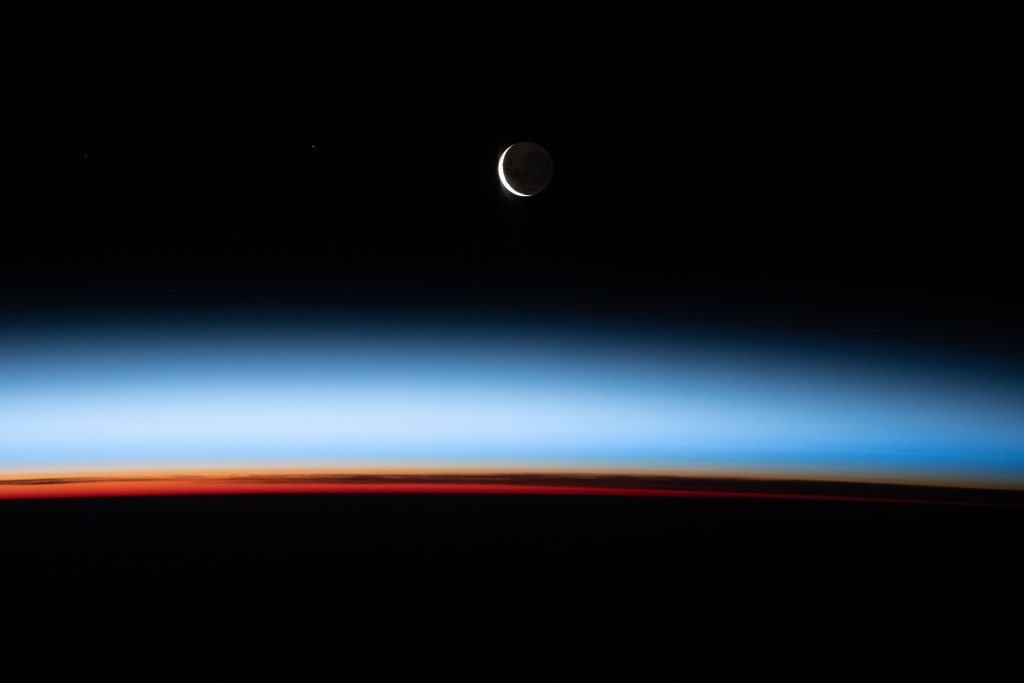
The dark side of the Moon is a unique and precious location for radio astronomers. Noise from Earth is blocked, allowing cosmology research to take place without electromagnetic interference. Nature magazine asks in recent article, “Are telescopes on the moon doomed before they’ve even been built?” Currently the dark side of the Moon is the […]
Applications for Lin Fellowship now open
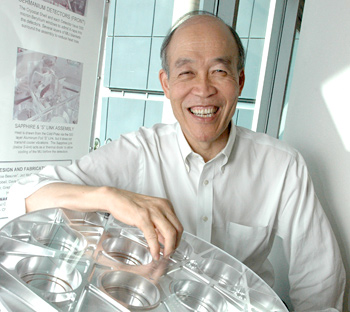
As usual, we will be accepting applications for the Lin Fellowship this year. This is an opportunity for UCB grad students (including incoming students) to work on SSL projects over the summer. The fellowship provides student salary support. More information can be found on the Lin Fellowship page and on this flyer. Please pass this information […]
Panel urges small satellite makers to prepare for big changes
A panel of experts at the SmallSat Symposium on Feb. 7 2023—including SSL’s Abhi Tripathi—issued a heads-up to small satellite manufacturers, cautioning them to be ready for the increasing availability of rideshare flights on SpaceX’s Starship spacecraft and Super Heavy Launch vehicle. Abhi stated, “If you are not preparing for how you’re going to launch […]
Blue Origin to provide launch services for ESCAPADE
When ESCAPADE launches in late 2024, Blue Origin of Kent, WA will provide launch services, NASA has announced, as part of its Venture-Class Acquisition of Dedicated and Rideshare (VADR) contract. Blue Origin is one of a dozen-plus companies NASA selected for VADR contracts in 2022, part of an effort by the agency to secure new […]